THINGS WE WISH MORE TRAVELERS KNEW

(and we're not gatekeeping)
So... we're not gatekeepers. At all. These are the things we find ourselves saying to travelers over and over, and sometimes to ourselves the night before a flight. None of them are revolutionary. All of them are the kind of advice we'd give a friend over a glass of wine. Take what's useful. Ignore what's not.
01 · PACKING
Pack for the destination, not the suitcase.
We are not going to tell you to live out of a capsule wardrobe. (One of us is a chronic overpacker — and yes, she's the brains behind this operation. We've made peace with it.) But pack what you'll actually wear. We've watched travelers haul suitcases of curated outfits across cobblestone hill towns that they never ended up wearing. Research the weather. Research the terrain. Consider your itinerary. Be realistic. Then... pack accordingly. Trust us, we know it's not always easy. Our founder still struggles with the fifth pair of shoes to wear with ONE outfit. But hey, we're all a work in progress, right?
02 · ITINERARY
Plan enough. Not a minute more.
A rough framework, real flexibility. We typically plan one or two anchor activities per day and leave the rest open. That's not by flaw, that's by design. We find that the best moments on trips happen in the gaps — the café you wandered into, the conversation that ran two hours, the side street nobody put on the itinerary. If your days are scheduled minute-to-minute, you'll miss the unexpected treasures. The structure is there to keep you oriented, not to keep you busy. Build the bones. Leave the rest to the trip.
03 · ARRIVAL
Day one: don't plan a thing.
We always think we're going to drop our bags and be out exploring. We almost never are. The flight, the time change, the overwhelm of being somewhere new — it all adds up. Day one is for a coffee, breakfast, settling in, a walk to explore the area, and maybe an early dinner. Take a nap if you need one. Walk a few blocks in any direction so the new city stops feeling foreign by sundown. Day two is when the real trip starts. Stop trying to optimize the first 24 hours of a trip, thinking you're going to miss out on something. They're not for sightseeing...they're for landing, literally and metaphorically. The travelers who push hard on day one are usually the ones running on fumes by day three.
04 · COMFORT ZONE
Try the thing that's "not your thing."
The cooking class. The early hike. The street market dinner where half the menu is unfamiliar. If it's outside your comfort zone and inside your physical ability, give it a shot! The thing you almost skipped is usually the thing you'll be talking about a year later. I've watched the most reluctant travelers become the loudest advocates for the activity they almost skipped: the dance class they "wouldn't have been good at," the hike they "couldn't do," the tour they "weren't into." Travel rewards mild discomfort more than it rewards mild convenience. Lean toward the unfamiliar more often than you'd think.
05 · REST
It is okay to sit something out.
Group travel (even with people you know and love) can be wonderful and exhausting in the same breath. The constant social input. The decisions. The cumulative steps. By day four, even the most extroverted traveler hits a wall. If you need a morning, an afternoon, or a whole day to reset, take it. No one is keeping score. Your energy is the actual currency of the trip. Spend it where it matters. The traveler who shows up to dinner restored is worth more to the group than the traveler who pushes through six activities and crashes by sunset.

06 · GROUP DYNAMICS
Being a good co-traveler is a skill — and one we can all sharpen.
The best travelers we know have one thing in common: they're flexible. They compromise. They remember that everyone in the group has invested time and money to be there, and is just as deserving of a great trip as they are. Group travel isn't about getting your way every day. It's holding your preferences loosely, speaking up when something genuinely matters, and going with the flow when it doesn't. The dinner spot you didn't pick. The detour that wasn't on your list. The traveler who needs an early night when you wanted to keep going. That's the real work of group travel...and for the people who do it well? Everyone wants them on the next trip.
07 · CONNECTIONS
Long layovers aren't an annoyance. They're a bonus city.
We used to grit our teeth through long flight connections. Now we look at a 12- to 36-hour layover as a built-in second destination on a single trip. The catch: you have to actually plan it. Check entry requirements (transit visas are not the same as tourist visas, and the rules vary by passport). Know your transport options ahead of time, what's open at the hour you'll arrive, and how much buffer you need before your next flight. Here's something most travelers miss: airports are often more prepared for you than you'd expect. Many major hubs like Singapore's Changi, Doha, Istanbul, Incheon and more offer free or low-cost city tours for transit passengers. Others have museums, gardens, spas, in-airport hotels, even movie theaters within the terminal. And if needed, book accommodations near the airport or downtown depending on how long it takes to get in and out. A little research before you book can turn a six-hour stopover into a guided afternoon out. Done right, a layover stops being a delay and becomes the unexpected best part of the trip — and you're already halfway across the world anyway.
08 · MONEY
Understand the currency before you leave. (Not just the rate.)
Knowing the exchange rate is half of it. The other half is purchasing power: how far does the currency actually go? For example, at the moment $6 USD is around 100,000 Indonesian Rupiah, but is that an average dinner? A taxi across town? Half a day's coffee? The number alone won't tell you. Before a trip, we research both: the rate and what an average meal, ride, or daily essential costs locally. While you're at it, find out whether the destination is mostly cash or card. This saves you from hunting for a legit currency exchange mid-trip, or — worse — getting stuck. It also helps you decide when to use cash vs. swipe a card (especially if you're trying to dodge international fees, which stack up faster than you'd think). And no, walking around with wads of cash isn't always smart or safe. Knowing all this before you go means you can budget realistically and stay flexible once you're there.
09 · SEATS
Choose your long-haul seat like your trip depends on it.
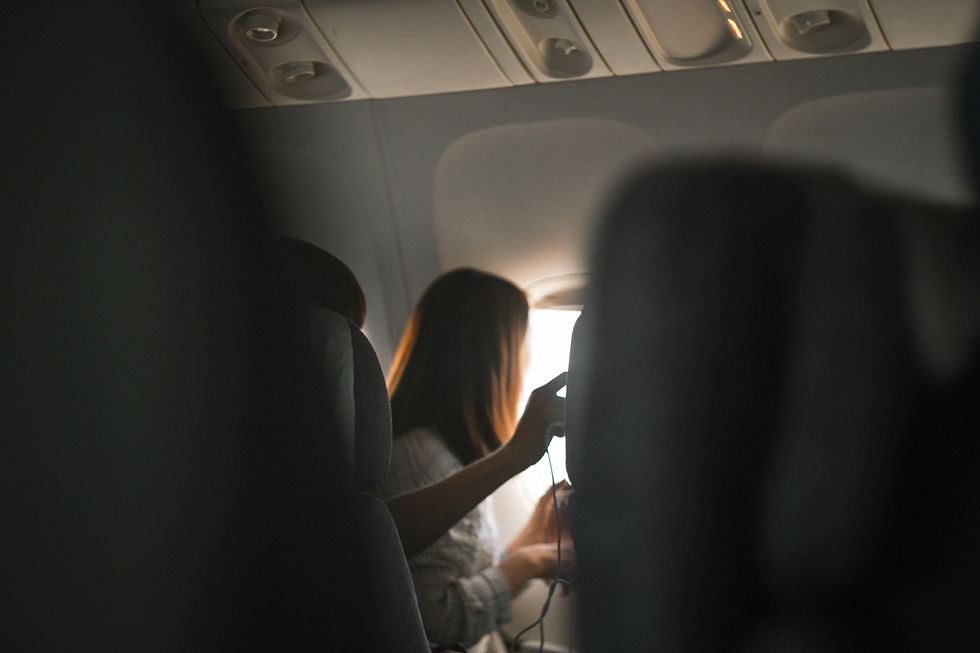
Business and premium economy are the dream, but for most travelers, not the reality. That shouldn't stop you from going. What you can do is pick the best economy seat available. Exit row first if you can grab it, unless you're not comfortable with the responsibility should an emergency arise. Otherwise: aisle, every single time. I used to be a window-seat ride-or-die. One flight from NYC to Shanghai cured me of that. Around hour seven, the whole plane was asleep, and I was desperate for a bathroom and as well as a good stretch but felt too guilty to wake my row mates. We get so locked in on the idea of comfort that we forget what it actually means at altitude. The window's a great headrest when you're sleeping, but a prison for everything else. With the right gear (eye mask, neck pillow, compression socks, decent headphones), an aisle seat earns its keep: room to stretch, bathroom freedom, slightly more legroom, and first dibs on the complimentary snacks in the back. The few extra dollars to lock in the right seat? Worth it. Trust me.
10 · ALIGNMENT
Pick the trip that matches where you are in life.
This one sounds soft, but it might be the most overlooked thing in travel. We see a place online, hear about it from a friend, book it — without ever asking the actual question: is this the right trip for me right now? And when expectation doesn't meet reality, we blame the destination. We say it was overrated, underwhelming, not for us. But often the place wasn't the problem — the alignment was. If you're deep in a diving and ocean exploration phase, Botswana is going to disappoint you. Not because Botswana isn't extraordinary (it is) — but because you wanted reefs and got savannah. That's not Botswana's fault. That's a misaligned trip. Before you book, ask yourself what you're actually drawn to at this point in your life — the energy, the pace, the kind of experience you're craving — and pick accordingly. You may still surprise yourself sometimes. But the right place at the right time? That's where the magic lives.
That's the list. Or — most of it. There's always more, and we'll be back with more soon.
If a Wanderlush trip is part of your year ahead, we'd love to have you. If not — go anyway. Go somewhere you've been thinking about. Go alone if you have to. Just go!

Comments